
Follow our social channels for the latest property market updates, insights and opportunities.
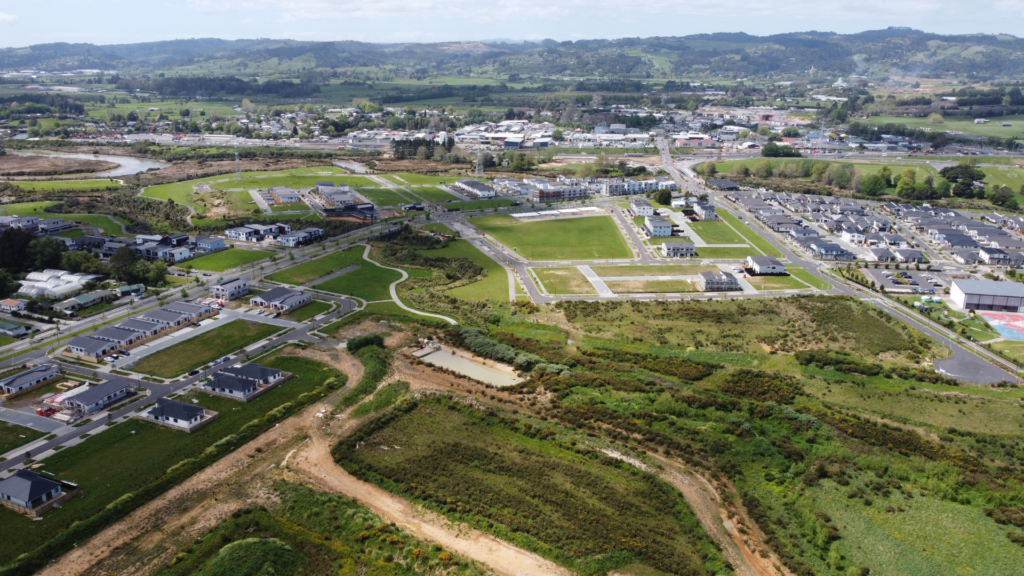
When you drive through parts of Karaka and Drury today, it is easy to focus on what is there right now.
A few shops. Some new homes. Open land. Roadworks. Developing neighbourhoods. And in some places, it may still feel like the area is waiting for the next stage of growth to arrive.
That is a fair observation.
But it is also only half the story.
Because when you are buying in a developing suburb, the real value is not always in what you can see today. Often, it is in what is already planned, funded, consented, or starting to take shape around you. And that is where Karaka and Drury become very interesting.
Today's Quiet Streets can Become Tomorrow's Connected Community
Every established suburb started somewhere.
Before the cafés, supermarkets, schools, retail centres, transport links and community spaces were fully in place, many now-popular areas once felt incomplete too.
That is the nature of growth areas.
In the early stages, buyers are often looking at a location before the convenience has fully arrived. There may not be a major town centre down the road yet. The train station may still be under construction. The retail offering may still be coming. The full school and healthcare network may still be developing.
But that is also why pricing can still feel more accessible compared with more established Auckland suburbs.
You are not just buying what is there today. You are buying into the direction of the area.
Auckland Council has identified the wider Drury and Pukekohe area as a major growth corridor, with around 45% of Auckland’s future urban land located around Drury and Pukekohe and an estimated 35,000 dwellings expected over the next 30 years. That is not a small local upgrade. That is long-term city planning.
The Town Centre is Coming
One of the biggest changes planned for the area is the new Drury town centre.
Kiwi Property is developing a 53-hectare metropolitan centre in Drury, with the vision of creating a place where people can live, work, shop and connect. The development is planned over several stages, with earthworks and civil works in the first phase, homes and large-format retail from 2027 onwards, and a broader town centre including offices, civic spaces, specialty retail and apartments from 2032 onwards.
The Drury Metropolitan Centre has also received fast-track approval, with plans including approximately 10,000 square metres of commercial space, 56,000 square metres of retail, and 2,000 square metres of community activity. The project is projected to contribute more than $1.45 billion to Auckland’s economy over 11 years.
For everyday buyers, that matters.
Because once those shops, services, offices, cafés, supermarkets and community spaces are operating, the way people experience the area will feel very different.
A location that currently feels like it is still forming can quickly become a place where daily life is much easier.
Big Retailers are Already Moving
One of the clearest signs of confidence in a growth area is when major retailers start committing to it.
Kiwi Property has announced conditional land sales at Drury involving large-format retailers including Costco, Briscoes, Rebel Sport and Harvey Norman, with around 77% of its large-format retail land conditionally sold.
Costco has also reached a conditional agreement for 6.4 hectares of land at Kiwi Property’s Drury development, paving the way for New Zealand’s second Costco store.

Source: NZ Herald
A New World supermarket has also been referenced as part of the emerging large-format retail picture in Drury, alongside other major retail brands.
This is important because retail follows people, but it also attracts people. Once everyday conveniences are in place, the area becomes easier to live in, easier to rent in, easier to sell in, and more attractive to families who may previously have felt it was still too early.
Transport is Changing Too
Transport is one of the biggest factors in how a suburb grows.
Drury is set to benefit from new rail infrastructure, with new stations planned at Drury Central, Drury West and Paerata. KiwiRail notes that these stations will include bus interchanges, walking and cycling connections, and park-and-ride facilities.
Roading upgrades are also part of the picture.
The SH22 Drury upgrade is designed to improve access to new housing developments and the new Ngākōroa Railway Station, including widening parts of SH22 from two lanes to four and adding intersection improvements.
The SH1 Papakura to Drury project includes new traffic lanes, Drury interchange improvements, walking and cycling paths, and upgrades designed to improve safety, resilience and capacity.
For buyers, this is where foresight matters.
A suburb can feel further away before the transport network is finished. But once train stations, bus connections and upgraded motorway access are in place, the way people perceive distance can change quickly.
Healthcare and Schools Are Part of the Bigger Picture
It is not just shops and transport.
The Government has confirmed land acquisition is underway for a future South Auckland hospital, with Drury identified as a strong location due to its proximity to key transport corridors and planned public transport connections.
Education infrastructure is also growing. A new state specialist school has been established in Drury, and Ministry of Education planning documents have previously identified the need for additional primary and secondary schooling capacity as Drury West grows.
These are the types of services that help turn a developing suburb into a fully functioning community.
A supermarket is convenient. A train station is useful. But schools, healthcare, roads, parks, retail, jobs and community services together are what make a place feel complete.
The Hobsonville Point Lesson
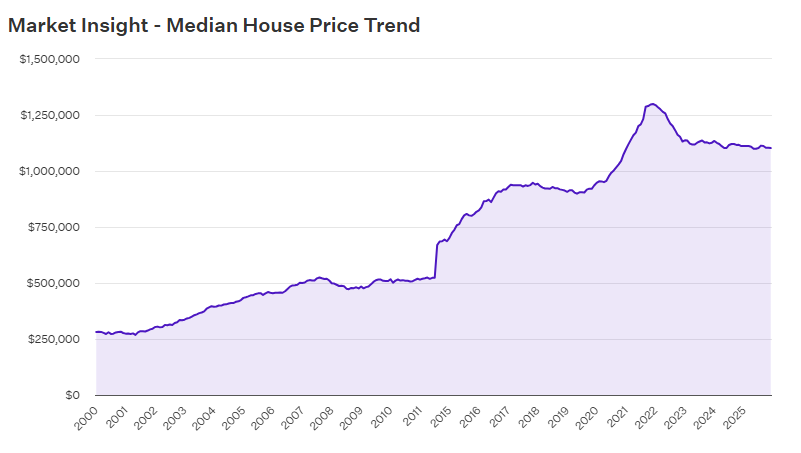
A good comparison is Hobsonville Point.
Today, people see it as a well-established, walkable and desirable Auckland community. But years ago, it was also a developing area with a lot still to come.
Source: Opes Partners
Auckland Council has described Hobsonville Point as an example of smart housing in a growing city, with walkable, well-designed mixed-density housing and a strong sense of community.
That transformation did not happen overnight.
It happened because infrastructure, amenity, homes, parks, transport links and community facilities came together over time.
That is the lesson for buyers looking at Karaka and Drury today.
If you wait until everything is finished, operating and obvious, the market may price the area very differently.
This is Where Long-Term Thinking Matters
No one can guarantee what property prices will do.
It would be too simplistic to say every home in Karaka or Drury will automatically be worth 20% or 30% more just because new amenities arrive.
Property values depend on many things: interest rates, lending conditions, supply, buyer demand, construction quality, location, land value and the wider economy.
But it is also fair to say this: convenience has value.
When a suburb becomes better connected, better serviced and easier to live in, buyer demand can strengthen.
That is why developing suburbs often reward people who can look a little further ahead.
Not five weeks ahead.
Five years ahead.
Buying Before The Full Convenience Premium Arrives
Right now, homes in parts of Karaka and Drury can still offer strong value compared with many more established Auckland suburbs.
Part of that is because the area is still developing.
The shops are coming. The schools are coming. The hospital planning is underway. The transport upgrades are progressing. The town centre is taking shape. The big retailers are positioning themselves.
But because not everything is fully built yet, buyers still have an opportunity to enter the area before the full convenience premium is potentially priced in.
That is the real opportunity.
Not buying because everything is already perfect.
Buying because you can see where the area is heading.
Look at What is Coming, Not Just What is Here Today
When people look at a home, they often focus on the immediate surroundings.
- Where is the nearest café?
- Where is the supermarket?
- How far is the train station?
- What schools are nearby?
- What is the commute like?
Those are all fair questions.
But in a growth area, there is one more question worth asking:
What will this area look like in five years?
Because that is where the bigger picture becomes clear.
Karaka and Drury are not standing still. They are part of one of Auckland’s most significant growth corridors, with major investment planned across housing, transport, retail, healthcare, education and community infrastructure.
For buyers with a long-term view, that matters.
Sometimes the best opportunity is not found in the suburb that already has everything.
Sometimes it is found in the suburb where everything is on its way.
What's On at Goodform Properties
Over the past week, we have seen a noticeable lift in genuine buyer activity. Enquiries have become more serious, open home appointments are booking quickly, and several homes are now either sold, under contract, unconditional, or under negotiation.
At Burberry Heights, we are now down to the final two homes: 26 Yellow Pear Lane and 99 Tributary Parade. Both are currently under negotiation, which is an encouraging sign of the confidence buyers are showing in the development.
At Watermere Residences, momentum has been just as strong. 4 Wehi Drive has sold, 2 Wehi Drive is now under contract, and our only two 5-bedroom homes have now been snapped up. 1 Waimarie Drive, a 4-bedroom home, is unconditional and settling soon.
From only $799,000, Watermere Residences continues to attract strong buyer interest and pricing has held firm – a clear reflection of the quality, design and long-term value of the development.
Open Home This Weekend at 2 Wehi Drive, Karaka
- Saturday: 1pm – 4pm
- Sunday: 12pm – 4pm
- Monday – Friday: Anytime, by appointment only
Please note, due to roadworks, take exit 461 and turn right into Victoria Street.
If the open home times do not suit, feel free to email Nicolas Ching at nicolas@gfp.co.nz or call 021 184 7777 directly to arrange a private viewing.


